|
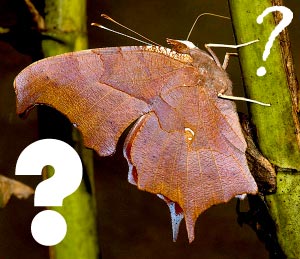
Anartia f. fatima (Fabricius, 1793) |
||
Distribution and Larval Foodplants: S TX, E & S Mexico to far NW Colombia |
||
|
Genus Anartia Hübner, [1819] Verz. bekannt. Schmett. (3): 33. Type-species: Papilio jatrophae Linnaeus 1763, in: Johansson, Cent. Ins. Rar.: 25, no. 73, by designation of Scudder (1875), Proc. Am. Acad. Arts Sci., Boston 10(2): 111, no. 73. = Celoena Boisduval, 1870 Consid. Lépid. Guat.: 38. Type-species: Papilio fatima Fabricius, 1793, Entomol. Syst. 3(1): 81, no. 252, by monotypy. ‡Celaena E. Doubleday, 1849 In: Gen. diurn. Lepid. (1)(26): 214. Type-species: Papilio fatima Fabricius, 1793, Entomol. Syst. 3(1): 81, no. 252, by designation of Hemming (1941), J. Soc. Bibl. Nat. Hist. 1(11): 425-426. Proposed in synonymy; a nomen nudum. = Anartiella Fruhstorfer, 1907 Int. Entomol. Z. 1(16): 112. Type-species: Vanessa lytrea Godart, 1819, in: Enc. méth. 9(Ins.)(1): (291), 299, no. 7, by monotypy.
Anartia fatima (Fabricius, 1793)
Anartia fatima fatima (Fabricius, 1793) Entomol. Syst. 3(1): 81, no. 252; cited Jones’ Icones 5: pl. 12, fig. 1; figured by Donovan (1800), Epit. Ins. India: pl. [30], fig. 2 (a copy from Jones’ Icones). Original Combination: P[apilio]. N[ymphales] Fatima Type Locality: “Indiis” Types: Type(s) probably lost. As originally proposed, this name is preoccupied by Papilio fatima Cramer, 1780, Uitl. Kapellen 3(23): 141, pl. 271, fig. A; (24): 174 (index). I.C.Z.N. Opinion 1339 exempted fatima Fabricius, 1793, from application of the Principle of Homonymy (Code Articles 52, 81.2). Some have considered this taxon to be a subspecies of A. amathea Linnaeus (1758), Syst. Nat. (ed. 10) 1: 478, no. 118. However, Davies et al. (1997), Proc. R. Soc. Lond. (B) Biol. Sci. 264(1383): 845-851, Dasmahapatra et al. (2002), Evolution 56(4): 741-753, and Blum et al. (2003), Mol. Phylogen. Evol. 26(1): 46-55, determined that A. fatima and A. amathea are both species-level taxa. = venusta Fruhstorfer, 1907 Int. Entomol. Z. 1(16): 111. Original Combination: [Anartia] fatima form venusta Type Locality: “Mexiko...Guatemala” Types: Syntypes may be in BMNH or MNHP. = moreno Kruck, 1931 Entomol. Rdsch. 48(22): 234-235, fig. 1 ♂ D. Original Combination: Anartia moreno Type Locality: “Meimat, Mexiko-Süd, Dep. Oaxaca” Types: Syntypes in Kruck collection; R. Fox (1942), Reading Pub. Mus. & Art Gallery, Sci. Pubs. No. 4: 18-19, pl. 1, figured one of two specimens cited in the original description, from “San Christobal, Dep’t Chiapas, Mex.” = ‡”albifasciata” Hoffmann, 1940 An. Inst. Biol. Univ. Méx. 11(1): 281, no. 2. Original Combination: Anartia fatima forma albifasciata Type Locality: “las regiones húmedas...Mexico” Types: “Syntypes” in AMNH. = ‡”albifusa” Hoffmann, 1940 An. Inst. Biol. Univ. Méx. 11(1): 281-282, fig. 6 ♀ D, 7 ♀ V (“holotype”). Original Combination: Anartia fatima ab. albifusa Type Locality: “Tierra Blanca, lugar situado en la tierra caliente del Estado de Veracruz” [Mexico] Types: “Holotype” in AMNH. = ‡”oscurata” R. de la Maza, 1976 Revta. Soc. Méx. Lepid. 2(2): 103; figured by R. de la Maza (1987), Marip. Méx.: pl. 3, fig. 9 ♂ D. Original Combination: Anartia fatima ab. oscurata Type Locality: “Cerro El Vigia, Veracruz, Mexico” Types: Location of “holotype” not known. ‡”kuhlweini” Geyer, 1833 In: Hübner, Zutr. Samml. exot. Schmett. 4: 6, cited unpublished Zutr. Samml. exot. Schmett. 5: figs. 813, 814, wherein Anartia fatima was employed. Original Combination: Anartia Kulhweini Proposed without a description or indication; a nomen nudum. |
||
|
|
||
Top of Page ● Main Page ● Reference Library ● Literature List ● Citation ● Interactive Listing |
||