|
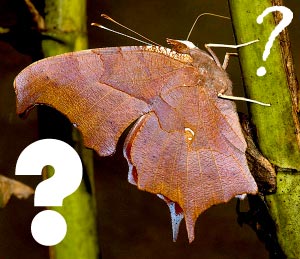
Aphrissa neleis (Boisduval, 1836) |
|
|
Distribution and Larval Foodplants: Cuba, Isla de Juventud, New Providence, N & S Andros, S FL
|
|
|
Aphrissa neleis (Boisduval, 1836) Spec. gén. Lépid. 1: 629-630, no. 23. Original Combination: Callidryas Neleis Type Locality: “Cuba” Types: Type(s) in BMNH. = ‡”poeyae” F. Brown, 1931 Am. Mus. Novit. (454): 10. Original Combination: Aphrissa statira neleis female form poeyæ Type Locality: “Cuba” Types: Holotype in USNM. |
|
|
Author's version of the text published as: Andrew D. Warren & John V. Calhoun 2011. Notes on the historical occurrence of Aphrissa neleis in Southern Florida, USA (Lepidoptera: Pieridae: Coliadinae). News of the Lepidopterists' Society 53(1): 3-7, 16 figs. p. 3-7, f. 1-16, formatted by the authors, not as in the "News of the Lepidopterists' Society" NOTES
ON THE HISTORICAL OCCURRENCE OF APHRISSA
NELEIS Andrew
D. Warren
Aphrissa Butler, 1873 is a Neotropical genus of large, bright pierids, or sulphur butterflies, comprised of about eight species (Lamas 2004). The genus is highly diverse in the Caribbean (including central and south Florida), where four species and nine subspecies-level taxa occur (Smith et al. 1994, Warren et al. 2011). Hispaniola hosts the greatest number of endemic Aphrissa taxa, with A. g. godartiana (Swainson, 1821), A. orbis browni (Munroe, 1947) and A. statira hispaniolae (Munroe, 1947). The other endemic Caribbean Aphrissa are shared variably between Cuba, Isla de Juventud, Jamaica, The Cayman Islands, some Bahaman Islands and southern Florida, except for A. statira floridensis (Neumogen, 1891), which is endemic to central and southern Florida, with strays and temporary colonists northward (Smith et al. 1994). Until
1973, A. s. floridensis was the sole Aphrissa taxon confirmed from Florida. That
year, a single male A. orbis orbis
(Poey, 1832) was collected on Big Pine Key, Monroe County, Florida (Bennett
& Knudson 1976); this taxon is otherwise endemic to Cuba, Isla de Juventud
and the Cayman Islands (Smith et al. 1994). While in good condition (figured by
Warren et al. 2011), this specimen appears to be a stray from Cuba (or
offspring from one), as its occurrence in the Florida Keys or elsewhere in
Florida has not subsequently been documented (Calhoun 1997). While curating specimens
of Aphrissa in early March 2011 in
the McGuire Center for Lepidoptera and Biodiversity (Florida Museum of Natural
History, University of Florida, Gainesville [MGCL]), ADW discovered five
specimens of Aphrissa neleis (Boisduval,
1836) labeled from southern Florida (Figs. 3, 4, 10-12). All of these specimens
were intermixed within series of A. statira
floridensis originating from the Allyn Museum of Entomology (now MGCL) and
the Florida State Collection of Arthropods [FSCA]. The oldest known specimen
from Florida is a female in very good condition (Fig. 3), labeled, / Dade Co.,
Fla. / Oct. 1 1959 /. No collector’s name is indicated, although the specimen
bears a second “FSCA” label. The next oldest specimen is a male (Fig. 10) in
good condition, labeled, / FLORIDA: S. Miami / 5-5-1982 / H. L. King /. This
specimen also has a “FSCA” label. Another male of A. neleis in very good condition (Fig. 11) is labeled, / 68. FLA:
DADE COUNTY / MIAMI: HAVEN SCHOOL / 19 MAY 1985 / F. L. GONZALEZ /. A third male
in good condition (Fig. 12) bears the same data, though its label begins with
“66.” Both of these males bear a second label, / Gonzalez colln. / Allyn Museum
/ Acc. 1995-8 /. Finally, one somewhat flight-worn female (Fig. 4) is labeled, /
139. FLA: DADE: MIAMI: / HAVEN SCHOOL / 25 MAY 1985 / F. L. GONZALEZ /, with a
second accession label identical to that of the males from the same locality,
Acc. 1995-8. Harold (Harry) L.
King (1900-1985) (collector of the male in Fig. 10), a commercial artist in
Sarasota, Florida, was an avid collector of Lepidoptera for much of his life. He
was a charter member of the Lepidopterists’ Society and a Research Associate of
the Florida State Collection of Arthropods (Weems 1985). He traveled widely in
Florida and contributed much to our knowledge of the butterflies and moths of
the state. His collection was deposited in the Florida State Collection of
Arthropods (now in MGCL) prior to his death. We have no knowledge of the
current whereabouts of Fernando L. Gonzalez. When he donated his collection to the
Allyn Museum of Entomology in 1995, he was a teacher in the Miami area. We
don’t know for certain, but Fernando may have been employed at the former Haven
School for mentally disabled children, which was located in the Sunset district
of southern Miami. At that time, he was a member of the Lepidopterists’ Society
and lived in Hialeah, Florida (Donahue 1986). Other specimens from the F. L.
Gonzalez collection at MGCL labeled from Haven School are common southern
Florida species (e.g., Phoebis agarithe
maxima (Neumoegen, 1891)). Aphrissa neleis is a rare species in collections, and is
relatively unknown to most butterfly enthusiasts. Its documented distribution
includes Cuba, Isla de Juventud, North and South Andros, and New Providence
Islands in The Bahamas (reports of A.
neleis from the Cayman Islands, e.g., Carpenter & Lewis 1943, Askew
1980, and Schwartz et al. 1987, refer to A.
statira; see Askew 1994, Askew & Stafford 2008). Boisduval (1836)
described the species from Cuba. Brown (1931) revised Aphrissa, and considered A.
neleis to be a “form” of A. statira
(Cramer, 1777). However, Bates (1935) continued to treat A. neleis as a separate species, as did Torre y Callejas (1954), based
on differences in the male genitalia between A. neleis and A. statira
cubana d’Almeida, 1939. Subsequent to Torre y Callejas (1954), A. neleis was mentioned in a number of
faunal studies (e.g., Torre y Callejas 1971, Riley 1975, Alayo & Hernández
1987, Smith et al. 1994, 1998, Hernández 2004, Fernández-Hernández 2007). Nothing
is known about its early stages, but Lysiloma
sabieu (Benth.) (Fabaceae) was reported as a larval foodplant for A. neleis in the Bahamas (Emmel 2007). This
plant is an exotic, which occurs rarely in disturbed hammock forest in
Miami-Dade County, Florida (Wunderlin & Hansen 2003). Hernández (2004)
suggested that A. neleis possibly
also feeds on Cassia sp. (Fabaceae)
or species of Caesalpinaceae, several of which are available in southern
Florida. The overall highly restricted geographic distribution of A. neleis, combined with the scarcity of
specimens in collections and the general lack of knowledge about this taxon argue
against mislabeling of the Florida specimens. While subtle, there
are a number of wing characters that separate A. neleis from A. s.
floridensis. Females of the two taxa are perhaps most easily separated
(Figs. 1-8). The forewing of A. neleis
(n = 11) (Figs. 1-4, 7 left, 8 left) is more angular (apex more rounded on A. s. floridensis (n = 90), Figs. 5-6, 7
right, 8 right), and the forewing costa of A.
neleis is yellow to the apex, with a slight trace of black scaling at most,
near the apex (the forewing costa of A.
s. floridensis often has extensive blackish distad, especially at the apex).
Dark scaling at vein ends, along the outer forewing margin above (black) and
below (black point surrounded by violet and/or ochreous scaling), is developed
into distinct, prominent spots on A.
neleis, only rarely conjoined by dark scaling between the spots, whereas
dark scaling frequently forms a continuous border on A. s. floridensis (though the development of this border is
variable), with dark scaling only slightly swollen at vein ends, which are not
marked by a black point. The ventral hindwing of A. neleis bears two pale, rounded, discal-postdiscal spots,
variably outlined in pinkish scales (Fig. 8 left), that are often lacking or poorly
developed on A. s. floridensis (Fig.
8 right); however, rare, tawnier females of A.
s. floridensis tend to have better developed discal-postdiscal spots with
partial or complete borders of pinkish scales (see Warren et al. 2011). Additional
differences between females include the small dark spots at vein ends on the
dorsal and ventral hindwing of A. neleis
(these are absent on A. s. floridensis
above, absent or barely discernable below), the richer, bright yellow dorsal and
ventral coloration of A. neleis
(coloration of female A. s. floridensis
is highly variable from whitish to yellow and rare females are orangish, but rarely
approaches the rich yellow of fresh individuals of A. neleis), the generally swollen forewing black spot at the end of
the discal cell on A. neleis (Fig. 7
left; this is usually smaller and more regularly-shaped on A. s. floridensis, especially above, as in Fig. 7 right). Both
sexes of A. neleis differ from A. s. floridensis by the presence of a
subtle, diffused, pinkish spot at the immediate base of the ventral hindwing
(Fig. 8 left, 16 left, and all other ventral images of A. neleis), noted by Boisduval (1836) and Alayo & Hernández (1987),
hence the name Riley (1975) used for this species, Pink-spot Sulphur (though
this spot is also present on A.
godartiana and A. orbis).
Figs.
1-8.
Females (dorsal left, ventral right for Figs. 1-6) of Aphrissa neleis and A.
statira floridensis (all MGCL). 1.
A. neleis, Bahamas, N. Andros Is.,
Small Hope Bay, 24.v.1994. 2. A. neleis, Bahamas, N. Andros Is., Davis
Ck., vi.2004. 3. A. neleis, USA, Florida, Miami-Dade Co.,
1.x.1959. 4. A. neleis, USA, Florida, Miami-Dade Co., Haven School, 25.v.1985. 5. A.
s. floridensis, USA, Florida, Broward Co., Hugh Taylor Birch S.P., 28.v.79.
6. A. s. floridensis, USA, Florida, Collier Co., Marco Is., 29.x.1999.
7. Forewing comparison of A. neleis (left) and A. s. floridensis (right), showing size
of cell-end spot and extent of darkening at apex. 8. Hindwing comparison of A.
neleis (left) and A. s. floridensis
(right), showing pink basal spot and well-developed discal-postdiscal spots of the
former. Males of A. neleis (n = 23) (Figs. 9-12, 15 left,
16 left) differ from those of A. s.
floridensis (n = 110) (Figs. 13-14, 15 right, 16 right) in their less
rounded, more angular forewings and hindwings, the yellower (sometimes
appearing greenish) marginal areas on the upperside of all wings (this area is whiter
on A. s. floridensis), the dorsal forewing
basal yellow occupying all of the discal cell, as in Fig. 15 left (the distal
fourth of the discal cell in A. s.
floridensis has yellow replaced with whitish on 108 of 110 specimens
examined (Fig. 15 right), although the extent of whitish scaling within the cell
is highly variable), and the small black spots at vein ends on the ventral hindwing, as in Fig. 16 left (these are absent on A. s. floridensis, Fig. 16 right). No males of A. neleis were found with black scaling along the costa, apex, or
outer margin of the dorsal forewing, while many individuals of A. s. floridensis have some black
scaling in these areas, especially at the forewing apex.
Figs.
9-16.
Males (dorsal left, ventral right for Figs. 9-14) of Aphrissa neleis and A.
statira floridensis (all MGCL). 9.
A. neleis, Bahamas, N. Andros Is.,
Davis Ck, vi.2004. 10. A. neleis, USA, Florida, Miami-Dade Co.,
South Miami, 5.v.1982. 11. A. neleis, USA, Florida, Miami-Dade Co.,
Haven School, 19.v.1985. 12. A. neleis, USA, Florida, Miami-Dade Co.,
Haven School, 19.v.1985. 13. A. s. floridensis, USA, Florida, Broward
Co., Hollywood, 2.x.1966. 14. A. s. floridensis, USA, Florida, Lee
Co., Bonita Springs, ex-larva emerged 20.vii.1997. 15. Forewing detail, A.
neleis (left) and A. s. floridensis
(right), showing pale coloration invading into the discal cell on the latter. 16. Hindwing comparison of A. neleis (left) and A. s. floridensis (right), showing pink
basal spot and black marginal spots of the former. Aphrissa neleis is less likely to be confused with Phoebis sennae (Linnaeus, 1758). All but
the palest males of P. sennae have
prominent discal cell spots on the ventral forewings and hindwings. In extreme
male examples of P. sennae, these
discal spots may be highly reduced, but are still more prominent than they are on
males of Aphrissa, where they are
indicated only by a pale white dot, if at all. In addition, males and (especially)
females of Aphrissa (apparently all
except A. orbis) have a distinctive
glossy sheen to the ventral surface of the wings, most prominent when fresh,
that is lacking on Phoebis Hübner,
[1819]. Females of P. sennae and A. neleis further differ in a number of
ventral characters, most notably the complete absence of dark spots basad of
the discal-postdiscal spots on the hindwing of A. neleis, which are almost always present on P. sennae. Both sexes of P.
sennae tend to have a pinkish spot at the immediate base of the ventral
hindwing, as in A. neleis. However, in
P. sennae this spot tends to be more
prominent, often unevenly colored, and better-defined overall, although in pale
individuals it may be reduced as in A.
neleis. Finally, A. neleis may be
differentiated from P. sennae by the color
of the ventral antennal club. In A.
neleis (and A. s. floridensis) it
varies from pale greenish-yellow to orange-red, while it is orange-brown or brown
in P. sennae. While this note
represents the first voucher-based report of A. neleis from Florida and the United States, Emmel (2007) reported
a sight record (with no physical or photographic voucher) of a fresh female in
2002 on the University of Florida campus, Gainesville, Alachua County. In
August 2009, Marc C. Minno (pers. comm. to JVC) photographed a single butterfly
that he initially identified as A. neleis
in the vicinity of Gainesville, Alachua County, but a subsequent analysis of
his photographs revealed that the individual was a pale P. sennae. We feel that the presence of A. neleis in northern Florida is unlikely, unless there is a large
resident population in southern Florida that has been overlooked. The current status
of A. neleis in southern Florida is
unknown. Due to its close resemblance to A.
s. floridensis, and because it has not been the focus of any field or
museum searches until very recently, we feel it is possible that A. neleis could be a current resident
somewhere in southern Florida. Certainly, the specimens reported above suggest
that A. neleis has been a resident in
southern Florida in the past, at least in the late 1950’s and early-mid 1980’s
in the Miami area. We encourage Lepidopterists to carefully study all Florida
specimens of Aphrissa they encounter,
in an effort to better understand the status and distribution of A. neleis in southern Florida and the
United States. Acknowledgments We thank Jacqueline Y. Miller (MGCL) for
discussions, help with research, and comments on an early draft of this
manuscript, and Thomas C. Emmel (MGCL) for his critical review of this note. Literature
Cited Alayo, D. P. & L. R. Hernández. 1987. Atlas
de las Mariposas Diurnas de Cuba (Lepidoptera: Rhopalocera). Editorial
Cientifico-Tecnica, La Habana. [ii] + 148pp., 49 pls. Askew, R. R. 1980. The butterfly
(Lepidoptera, Rhopalocera) fauna of the Cayman Islands. Atoll Research Bulletin
241:121-138. Askew, R. R. 1994. Insects of the Cayman
Islands, pp. 333-356. In: Brunt, M. A. & J. E. Davies, Editors. The Cayman
Islands. Natural History and Biogeography. Kluwer Academic Publishers,
Dordrecht, The Netherlands. xx + 605pp. Askew, R. R. & P. A. van B. Stafford. 2008.
Butterflies of the Cayman Islands. Apollo Books, Stenstrup, Denmark. 175pp. Bates, M. 1935. The butterflies of Cuba. Bulletin
of the Museum of Comparative Zoology 78(2):63-258. Bennett, R. & E. C. Knudson. 1976. Additional
new butterfly records from Florida. Journal of the Lepidopterists’ Society
30(3):234-235. Boisduval, J. B. A. D. de. 1936. Suites à
Buffon. Histoire naturelle des Insectes. Spécies general des Lépidoptères. Librairie
Encylopédique de Roret, Paris. 1: 4 + xii + 690 + 6 pp., pls. 1A- 4A, 1B- 12B,
1C- 8C. Brown, F. M. 1931. A revision of the genus Aphrissa. American Museum Novitates 454:1-14. Calhoun, J. V. 1997. Updated list of the
butterflies and skippers of Florida (Lepidoptera: Papilionoidea and
Hesperioidea). Holarctic Lepidoptera 4(2):39-50. Carpenter, G. D. H. & C. B. Lewis. 1943. A collection of Lepidoptera (Rhopalocera) from the Cayman Islands. Annals of Carnegie Museum 29:371-396. Donahue, J. P. 1986. 1986 membership
directory. News of the Lepidopterists’ Society No. 6 (Nov./Dec.):50. Emmel, T. C. 2007. A record of Aphrissa neleis in north Florida
(Lepidoptera: Pieridae). Tropical Lepidoptera 17(1-2):6. Fernández-Hernández, D. M. 2007. Butterflies
of the agricultural experiment station of tropical roots and tubers, and Santa
Ana, Camagüey, Cuba: and annotated list. Acta Zoologica Mexicana (n.s.)
23(2):43-75. Hernandez, L. R. 2004. Field Guide of Cuban
– West Indies Butterflies. Ediluz, Maracaibo, Venezuela. 269 + xx pp., 31pls. Lamas, G. (Ed.). 2004. Atlas of Neotropical
Lepidoptera. Checklist: Part 4A. Hesperioidea – Papilionoidea. Scientific
Publishers, Gainesville, Florida. xxxvi + 439pp. Riley, N. D. 1975. A field guide to the
butterflies of the West Indies. Demeter Press, Boston, Massachusetts. 224 pp.,
24 pl. Schwartz, A., F. L. González & R. M.
Henderson. 1987. New records of butterflies from the West Indies. Journal of
the Lepidopterists’ Society 41(3):145-150. Smith, D. S., L. R. Hernández & N.
Davies. 1998. The butterflies of the Isle of Pines, Cuba: Eighty years on. Annals
of Carnegie Museum 67(4):281-298. Smith, D. S., L. D. Miller & J. Y.
Miller. 1994. The Butterflies of the West Indies and South Florida. Oxford
University Press, Oxford. [vi] + 264pp. Torre y Callejas, S. L. de la. 1954-1956. An
annotated list of the butterflies and skippers of Cuba (Lepidoptera,
Rhopalocera). Journal of the New York Entomological Society 62(1):1-25 {29 Oct
1954}, (2):113-128 {5 May 1955}, (3):189-192 {8 Dec 1955}, (4):207-249 {15 Oct
1956}. Torre y Callejas, S. L. de la. 1971. Mariposas
diurnas (Lepidoptera, Rhopalocera), colectadas en Cuba hasta el año 1969. Ciencias.
Universidad de Habana 4(18):1-47pp. Warren, A. D., K. J. Davis, N. V. Grishin, J. P. Pelham & E. M. Stangeland. 2011. Interactive Listing of American Butterflies. [29-I-11] http://www.butterfliesofamerica.com/ Weems, H. V. 1985.
In memoriam: Harold LaVerne King. Florida Entomologist 68(2):361. Wunderlin, R. P.
& B. F. Hansen. 2003. Guide to the Vascular Plants of Florida. Second
edition. University Press of Florida, Gainesville, Florida. 787 pp. |
|
|
Top of Page ● Main Page ● Reference Library ● Literature List ● Citation ● Interactive Listing |
|