|
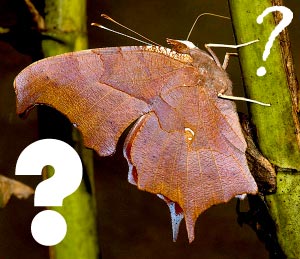
Battus p. philenor
(Linnaeus, 1771) |
||
|
Distribution and Larval Foodplants:
|
||
|
(From: A Catalogue of the Butterflies of the United States and Canada, Jonathan P. Pelham) Genus Battus Scopoli, 1777 Intro. Hist. Nat.: 433, no. 173. Type-species: Papilio polydamas Linnaeus, 1758, Syst. Nat. (ed. 10) 1: 460, no. 11, by designation of Lindsey (1925), Ann. Entomol. Soc. Am. 18(1): 80. = Laertias Hübner, [1819] Verz. bekannt. Schmett. (6): 84. Type-species: Papilio philenor Linnaeus, 1771, Mant. Plant. (2nd ed.): 535, by designation of Scudder (1872), 4th Ann. Rep. Peabody Acad. Sci. (1871): 64. = ‡Ithobalus Hübner, [1819] Verz. bekannt. Schmett. (6): 88. Type-species: Papilio polydamas Linnaeus, 1758, Syst. Nat. (ed. 10) 1: 460, no. 11, by designation of Scudder (1875), Proc. Am. Acad. Arts Sci., Boston 10(2): 198, no. 579. A junior objective synonym of Battus Scopoli, 1777. = Battuosa Möhn, 1999 In: Bauer and Frankenbach, Schmetterlinge Erde. 5: 6. Type-species: Papilio belus Cramer, 1777, Uitl. Kapellen 2(10): 23, pl. 112, figs. A, B; (16): 148 (index), by original designation.
Battus philenor (Linnaeus, 1771)
Battus philenor philenor (Linnaeus, 1771) Mant. Plant. (2nd ed.): 535. Original Combination: Papilio E[ques]. T[rojanus]. Philenor Type Locality: “America” Types: Lectotype in LSUK, designated by Honey and Scoble (2001), Zool. J. Linn. Soc. 132(3): 363, fig. 14 ♀ D. = astinous (Drury, 1773) Ill. Nat. Hist. 1: 21, pl. 11, figs. 1 ♂ D, 4 ♂ V (1770); 2: index (1773, name given). Original Combination: Pap[ilio]. Equ[es]. Troj[anus] Astinous Type Locality: “New York, Maryland and Virginia” Types: Types probably lost. = nezahualcoyotl (Strecker, 1885) Proc. Acad. Nat. Sci. Philad. 37(7/8): 174. Original Combination: Papilio Nezahualcoyotl Type Locality: “New Mexico, close to the Mexican border” Types: Holotype in FMNH. The holotype phenotypically represents what is recognized as Battus philenor acauda (Oberthür, 1879). This may be a case of individual variation or mislabeling. = ‡serpentariae (Fabricius, 1938) In: Bryk, Syst. Glossat.: 23-24, no. 20; cited Papilio philenor Linnaeus, 1771, Mant. Plant. (2nd ed.): 535, and J. E. Smith (1797), in: Smith & Abbot, Ins. Georgia 1: pl. 3. Original Combination: P[apilio]. T[rojanus]. Serpentariae Proposed as a replacement name for Papilio philenor based on the name of a foodplant in Smith and Abbot; a junior objective synonym of philenor. = ‡”obsoleta” (Ehrmann, 1900) Can. Entomol. 32(11): 348. Original Combination: Papilio philenor, Var. obsoleta ♂, nov. var. Type Locality: “S. W. Penn’a.” [Pennsylvania] Types: “Holotype” in CMNH; figured by W. Holland (1927), Ann. Carnegie Mus. 17(2): pl. 25, fig. 9 ♂ D. = ‡”wasmuthii” (A. C. Weeks, 1901) J. N. Y. Entomol. Soc. 9(2): 82-83, pl. 6 ♂ D&V. Original Combination: Papilio philenor aberr. Wasmuthii Type Locality: “in front of his residence” [Brooklyn, Kings County, New York] Types: “Holotype” in CMNH. |
||
|
Brower, Jane Van Zandt. 1958. Experimental Studies of Mimicry in some North American Butterflies. Part II. Battus philenor and Papilio troilus, P. polyxenes, and P. glaucus. Evolution 12(2): 123-136, 4 tables {30 Jun 1958} Fordyce, James A. and Chris C. Nice. 2003. Contemporary patterns in a historical context; phylogeographic history of the pipevine swallowtail, Battus philenor (Papilionidae). Evolution 57(5): 1089-1099, 4 figs., 4 tabs. {10 June 2003} Gillaspy, James E. and Johnny R. Lara. 1984. Rainstorm behavior of pipevine swallowtails, Battus philenor (L.). Journal of the Lepidopterists' Society 38(2): 142-143 {16 August 1984} Linnaeus, Carolus. 1771. Regni animalis, Appendix. Insecta, pp. 529-543. In: Mantissa plantarum altera generum editionis VI & specierum editionis II. Holmiae, Laurentius Salvius. Pp. [i-vi], 143-588. ([17 October]) [description of Papilio philenor] Möhn, Edwin. 1999. Papilionidae II. Battus. In: Bauer, E. & T. Frankenbach (Eds.), Schmetterlinge der Erde. Tagfalter. Keltern, Goecke & Evers. 5: 1-13, 20 pls. {15 October 1999; English ed. published 22 October} Racheli, Tommaso, and M. Oliverio. 1993. Biogeographical patterns of the neotropical genus Battus Scopoli 1777 (Lepidoptera Papilionidae). Tropical Zoology 6(1): 55-65, 3 figs., 3 tabs. {May 1993} Racheli, Tommaso, and Lorraine Pariset. 1992. Il genere Battus. Tassonomia e storia naturale (Lepidoptera, Papilionidae). Fragmenta entomologica (Roma) 23(supplemento): 1-163, 27 pls., 38 figs., 4 tabs. {30 June 1992} Rausher, Mark D. 1979. Larval habitat suitability and oviposition preference in three related butterflies. Ecology 60(3): 503-511, 3 figs., 7 tabs. {June 1979} Rausher, Mark D. 1995. Behavioral ecology of oviposition in the pipevine swallowtail, Battus philenor, pp. 53-62, 7 figs. In: J. M. Scriber, Y. Tsubaki and R. C. Lederhouse (Eds.), Swallowtail butterflies: Their ecology and evolutionary biology. Gainesville, Scientific Publishers. {1995} Tyler, Hamilton Alden, Keith Spalding Brown, Jr. and Kent H. Wilson. 1994. Swallowtail butterflies of the Americas. A study in biological dynamics, ecological diversity, biosystematics and conservation. Gainesville, Fl.; Scientific Publishers: 376 pp., 3 + 100 pls., figs., tabs., maps {[30 Sep] 1994} |
||
|
Top of Page ● Main Page ● Reference Library ● Literature List ● Citation ● Interactive Listing |
||