|
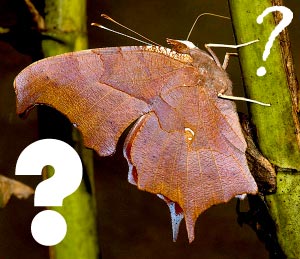
Nymphalis a. antiopa (Linnaeus, 1758) |
|||
Distribution and Larval Foodplants: |
|||
|
(From: A Catalogue of the Butterflies of the United States and Canada, Jonathan P. Pelham) Genus Nymphalis Kluk, 1780 Zwierz. Hist. Nat. Pocz. Gospod. 4: 86-89, no. 148. Type-species: Papilio polychloros Linnaeus, 1758, Syst. Nat. (ed. 10) 1: 477, no. 113, by designation of Hemming (1933), Entomol. 66(845): 223. I.C.Z.N. Opinion 278 placed this name on the Official List of Generic Names in Zoology as name no. 702. = ‡Scudderia Grote, 1873 Can. Entomol. 5(8): 144. Type-species: Papilio antiopa Linnaeus, 1758, Syst. Nat. (ed. 10) 1: 476-477, no. 112, by monotypy. Preoccupied by Scudderia Stål, 1873, Öfvers. K. VetenskAkad. Förh. 30: 41. = Euvanessa Scudder, 1889 Butts. E. U. S. & Can. 1(3): 387. Type-species: Papilio antiopa Linnaeus, 1758, Syst. Nat. (ed. 10) 1: 476-477, no. 112, as a replacement name. Proposed to replace Scudderia Grote, 1873, preoccupied (Code Articles 60.3, 67.8). = Roddia Korshunov, 1995 In: Korshunov & Gorbunov, Butts. Asiatic Russia: 81-82. Type-species: Papilio l-album Esper, 1781, Die Schmett. 1(2)(2): pl. 62 (cont. 12), figs. 3a, 3b; (3): 69-71, by original designation. Wahlberg and Nylin (2003), Cladistics 19(3): 221-222, and Wahlberg et al. (2005), Biol. J. Linn. Soc. 86(2): 235, 238, 250, determined this synonymy. = ‡Antiopana Korb, 2005 Cat. Butts. ex USSR: 72. Type-species: Papilio antiopa Linnaeus, 1758, by original designation. A junior objective synonym of Euvanessa
Nymphalis antiopa (Linnaeus, 1758)
Nymphalis antiopa antiopa (Linnaeus, 1758) Syst. Nat. (ed. 10) 1: 476-477, no. 112; cited Linnaeus (1746), Fauna Svecica: 232, no. 772, among others. Original Combination: P[apilio]. N[ymphalis phaleratus] Antiopa Type Locality: “etiam in Americae”; “Sweden” implied from the reference to Fauna Svecica. Types: Lectotype in LSUK, designated by Honey and Scoble (2001), Zool. J. Linn. Soc. 132(3): 297. = pompadour (Pollich, 1781) Bemerk. Khurpfälz, phys.-oekon. Ges. (1779): 258. Original Combination: Papilio Pompadour Type Locality: “Pfalz” Types: Type(s) probably lost. = ‡ morio (Retzius, 1783) Gen. Spec. Ins.: 31, no. 9; cited de Geer (1752), Mém. Hist. Ins. 1(1): 305, figs. 1-9, and Papilio atalanta Linnaeus, 1758, Syst. Nat. (ed. 10) 1: 476-477, no. 112. Original Combination: P[apilio]. Morio Type Locality: Not stated. Types: Location of types not known. Preoccupied by Papilio morio Scopoli, 1763, Entomol. Carn.: 181-182, no. 464. = lintnerii (Fitch, 1857) Trans. N. Y. State Agric. Soc. 16(1856): 485, no. 211. Original Combination: Vanessa Lintnerii Type Locality: “New York”; probably “Schoharie, Schoharie County” were Lintner lived. Types: Probably lost; no specimens were mentioned from the NYSM by J. Barnes (1988), Bull. N. Y. State Mus. (461): 112. = thomsonii (Butler, 1887) Ann. Mag. Nat. Hist. (5)19(110): 104. Original Combination: Vanessa Thomsonii Type Locality: “British Honduras?” Types: Holotype in BMNH. = hyperborea (Seitz, 1913) In: Seitz, Grossschmett. Erde 5(189): 457, pl. 93f, fig. [1] ♀ D. Original Combination: Vanessa antiopa var. hyperborea Type Locality: “allerhöchsten Norden, in Alaska” Types: Location of holotype not known, possibly in SMNS. Shapiro (1981), J. Lepid. Soc. 35(2): 124-131, considered this a subspecies-level taxon, while Layberry, et al. (1998), Butts. Can.: 203, treated this as a synonym of N. a. antiopa. = borealis (Wnukowsky, 1927) Mitt. Münchn. Entomol. Ges. 17(7-12): 69, no. 2. Original Combination: Vanessa (Euvanessa) antiopa borealis Type Locality: “Siberia septentrionalis-orientalis (Jakutsk)” [Sakha Autonomous Republic, Russia] Types: Syntypes in UTR. = ‡”hygiaea” (Heydenreich, 1851) Lepid. Europ. Cat. Meth. (Edit. 3): 7; cited Papilio antiopa (sensu Hübner [1836], Samml. europ. Schmett. 1: fig. 993, sensu Herbst (1794), in: Jablonsky, Natursyst. Ins., Schmett. 7: pl. 168, figs, 1, 2, sensu Esper (1777) Die Schmett. 1(1)(5): pl. 29, fig. 2, and sensu Freyer [1835], Neuer Beitr. Schmett. 2(25): pl. 145). Original Combination: Vanessa [Antiopa] ab. Hygiaea Type Locality: Not stated. Types: Possible “syntype(s)” in NMW and ZSMC. This name was mentioned by Heydenreich (1846), Verz. europ. Schmett. (ed. 2): 1 (as Vanessa antiopa v[ar]. hygiea), without a description or indication; a nomen nudum. = ‡”betulae” (Fabricius, 1938) In: Bryk, Syst. Glossat.: 111, no. 2; cited Papilio antiopa Linnaeus, 1758, Syst. Nat. (ed. 10) 1: 476-477, no. 112. Original Combination: V[anessa]. Betulae Proposed as a replacement name for Papilio antiopa Linnaeus, 1758, based on a larval foodplant; a junior objective synonym of antiopa. = ‡bibla (Fabricius, 1938) In: Bryk, Syst. Glossat.: 111, no. 3. Original Combination: V[anessa]. Bibla Type Locality: “Pennsylvania” Types: Location of type(s) not known. = ‡”obscura” (Cockerell, 1890) Entomol. Rec. & J. Var. 1(1): 14; cited the description of a specimen by Bunker (1876), Can. Entomol. 8(12): 240. Original Combination: Vanessa antiopa [= var obscura] Type Locality: “near Rochester, in New York State” [Monroe County] Types: Location of “holotype” not known. The text clearly indicates that this taxon was described as an individual variant. = ‡”hippolyta” (Lyman, 1898) Can. Entomol. 30(3): 49, pl. 4, fig. 6 ♀ D (“holotype”). Original Combination: [Vanessa Antiopa] ab. Hippolyta Type Locality: “Boundary Creek, B. C.” [British Columbia] Types: “Holotype” in LEMQ. = ‡”grandis” (Ehrmann, 1900) Can. Entomol. 32(11): 348. Original Combination: Vanessa antiopa, Var. grandis ♀, nov. var. Type Locality: “S. W. Penn’a.” [Pennsylvania] Types: “Holotype” in CMNH; figured by W. Holland (1927), Ann. Carnegie Mus. 17(2): pl. 25, fig. 5 ♀ D The text clearly indicates that this taxon was described as an individual variant. |
|||
|
|
|||
Top of Page ● Main Page ● Reference Library ● Literature List ● Citation ● Interactive Listing |
|||