|
|
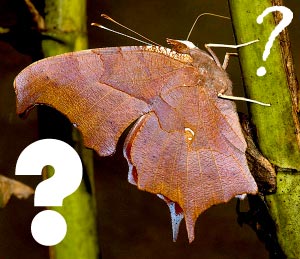
Papilio polyxenes asterius (Stoll, 1782) |
|
|
Distribution and Larval Foodplants: Canada, E USA, S to El Salvador
|
|
|
(From: A Catalogue of the Butterflies of the United States and Canada, Jonathan P. Pelham) Genus Papilio Linnaeus, 1758 Syst. Nat. (ed. 10) 1: 458. Type-species: Papilio machaon Linnaeus, 1758, Syst. Nat. (ed. 10) 1: 462, no. 27, by designation of Latreille (1810), Consid. gén. Anim. Crust. Arach. Ins.: 350, 440. I.C.Z.N. Opinion 278 placed this name on the Official List of Generic Names in Zoology as name no. 703. The generic and subgeneric arrangement follows J. Miller (1987), Bull. Am. Mus. Nat. Hist. 186(4): 365-512.
Papilio polyxenes Fabricius, 1775 Syst. Entomol.: 444-445, no. 10. Original Combination: P[apilio]. E[ques]. T[rojanus]. Polyxenes Type Locality: “America”; further defined as “Americae meridionali insulis” by Fabricius (1781), Spec. Ins. 2: 4, no. 13; defined as “Cuba” by Rothschild and Jordan (1906), Novit. Zool. 13(3): 547. Types: Type(s) probably lost.
Papilio polyxenes asterius (Stoll, 1782) Uitl. Kapellen 4(33): 194-196, pl. 385, figs. C ♂ D, D ♂ V; 4(34): 248 (index). Original Combination: Pap[ilio]. Eq[ues]. Achiv[us]. Asterius Type Locality: “Nord-Amerika en wordt in Niewjork, Virginien en Carolina” “l’Amerique Septentrionale, dans la Nouvelle York, en Virginie & dans la Caroline” Types: Possible syntype in RNHL. This is one of the species implied in Linnaeus' original description of Papilio ajax (see Eurytides marcellus), based on Petiver (1709), Gazophylacium: pl. 6, fig. 12. = ampliata Ménétriés, 1855 Enum. corp. anim. (1): 99-100, under no. 60. Original Combination: [Papilio Asterias] var. Ampliata Type Locality: “l’Amerique septentrionale”; suggested to be “Mexico” by Rothschild and Jordan (1906), Novit. Zool. 13(3): 545. Types: Type(s) probably in ZIN. = calverleyi Grote, 1864 Proc. Acad. Nat. Sci. Philad. 2(4): 441, pl. 10. Original Combination: Papilio Calverleyi Type Locality: “New York State...immediate neighborhood of the village of New Lots, Queen's County, Long Island” Types: Holotype probably in CMNH; figured by W. Holland (1898), Butt. Book: pl. 41, fig. 6 ♀ D. = asterioides Reakirt, [1867] Proc. Acad. Nat. Sci. Philad. 18(3): 331-332, no. 27. Original Combination: Papilio asterioides Type Locality: “Mexico” Types: Holotype (#7011) in ANSP. = curvifascia Skinner, 1902 Entomol. News 13(6): 183. Original Combination: Papilio polyxenes var. curvifascia Type Locality: “Rincon, New Mexico” [Dona Ana County] Types: Syntype (#7026) in ANSP; a “paratype” figured by W. Holland (1931), Butt. Book (rev. ed.): pl. 70, fig. 12 ♂ D. = gracehus Fabricius, 1938 In: Bryk, Syst. Glossat.: 23, no. 18. Original Combination: P[apilio]. T[rojanus]. Gracehus Type Locality: “Philadelphia” [Philadlephia County, Pennsylvania] Types: Location of type not known. This name is probably a printer’s error for gracchus. = ‡”viridis” Cockerell, 1889 Entomol. 22(314): 199. Original Combination: Papilio asterias var. pupae viridis Type Locality: Not stated. Types: No “type” designated (a variety of the pupa). = ‡”alunata” Skinner & E. Aaron, 1889 Can. Entomol. 21(7): 127-128. Original Combination: P[apilio]. asterius, var. ♀ alunata Type Locality: “Philadelphia, Pa.” implied from the title of the paper; “syntype” labeled from “Fairmont Park, Phila.” [Philadelphia County, Pennsylvania] Types: “Syntype” (#7012) in ANSP. = ‡”mediocauda” Eimer, 1895 Artb. Verwandtsch. Schmett. 2: 118, 138. Original Combination: Papilio mediocauda ♂ Type Locality: “Canada” Types: Location of type(s) not known. This taxon was given a binomial combination, but the appended “♂” indicates an infrasubspecific name. It was listed as Papilio Asterias (P[apilio]. mediocanda) on page 118; an incorrect original spelling. This misspelling occurred in the list of figures given on the plates, and is a printers error judging from the derivation of the name. This taxon might represent P. brevicauda or P. polyxenes asterius. = ‡”semialba” Ehrmann, 1900 Can. Entomol. 32(11): 348. Original Combination: Papilio asterias, Var. semi-alba ♂, nov. var. Type Locality: “S. W. Penn’a.” [Pennsylvania] Types: “Holotype” in CMNH; figured by W. Holland (1927), Ann. Carnegie Mus. 17(2): pl. 25, fig. 1 ♂ D. = ‡”masculina” Reiff, 1911 Z. wiss. InsektBiol. 7(7/8): 235. Original Combination: [Papilio polyxenes] ab. masculina Type Locality: Not stated. Types: “Holotype” in MCZ (ex Bussey Institute). = ‡”ehrmanni” Ehrmann, 1925 Bull. Brooklyn Entomol. Soc. 20(2): 84. Original Combination: Papilio ehrmanni n. ab. (of asterius) Type Locality: “Hammet Place, Allegheny Co., Pa.” [Pittsburgh, Pennsylvania] Types: “Holotype” in CMNH; figured by W. Holland (1927), Ann. Carnegie Mus. 17(2): pl. 25, fig. 2 ♂ D. I treat this name as if proposed in the form “Papilio asterius ab. ehrmanni.” = ‡”gertrudis” Kruck, 1931 Entomol. Rdsch. 48(22): 236, fig. 2 ♂ D (“holotype”). Original Combination: Pap[ilio]. asterius ab. gertrudis ab. nov. Type Locality: “Mexiko-Süd, Dep. Oaxaca” Types: “Holotype” in Kruck collection. = ‡”forsythae” Wood, 1937 Entomol. News 48(10): 273, pl. 4, ♂ D (“holotype”). Original Combination: Papilio ajax forsythae new aberration Type Locality: “Florida City, Florida” [Miami-Dade County] Types: “Holotype” in AMNH. = ‡”pseudoamericus” F. Brown, [1943] Entomol. News 53(10): 291. Original Combination: [Papilio ajax race] pseudoamericus Type Locality: “Troy, Illinois” [Madison County] Types: “Holotype” in Meiners collection, St. Louis, Missouri. The text clearly indicates that this taxon was described as an individual variant. = ‡”subamplicata” Dufrane, 1946 Bull. Annls. Soc. Entomol. Belg. 82(5/6): 106. Original Combination: P[apilio]. polyxenes asterius f. subamplicata Type Locality: “Temple, Pa. (E. U. A.)” [Berks County, Pennsylvania] Types: “Holotype” probably in IRSN. |
|
|
|
|
|
Top of Page ● Main Page ● Reference Library ● Literature List ● Citation ● Interactive Listing |
|