
|


       |
Loading
|
|
When books lie:
Antennae of Amblyscirtes alternata (Dusky Roadside-Skipper)
|
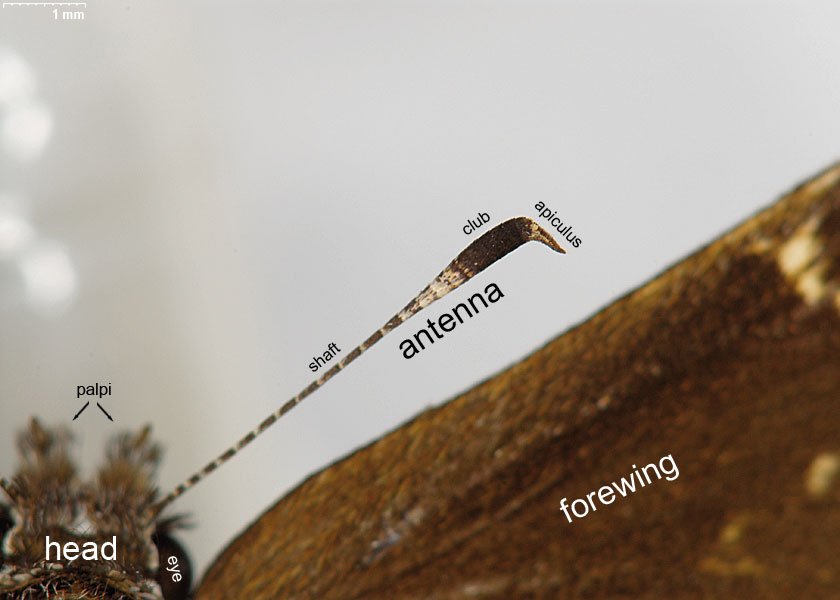
Several field-guides mention that Dusky Roadside-Skipper – Amblyscirtes alternata (Grote & Robinson, 1867) has blunt antennae. This is not quite true if taken literally, and might deceive observers and collectors. Skipper antennae typically consist of three parts: club (bulbous part of antenna near the tip), shaft (a stem from the head to the club) and apiculus (bent, thinner part of the club end). When apiculus is missing, antennae look "blunt" at the end. All Amblyscirtes species possess apiculus, including A. alternata. Therefore the statement "... antennal club, without a tapered extension (apiculus)" quoted from J. Glassberg (1999) "Butterflies through binoculars: the East", Oxford University Press, is wrong. However, in dry specimens, apiculus is easy to break off. When apiculus is broken off, antennae indeed look blunt, but it does not mean that you have A. alternata. |
|
All images are © Nick V. Grishin, except as noted |
|
The antennae shown are photographed in spread specimens from above, in the position shown on this image. This is |
|
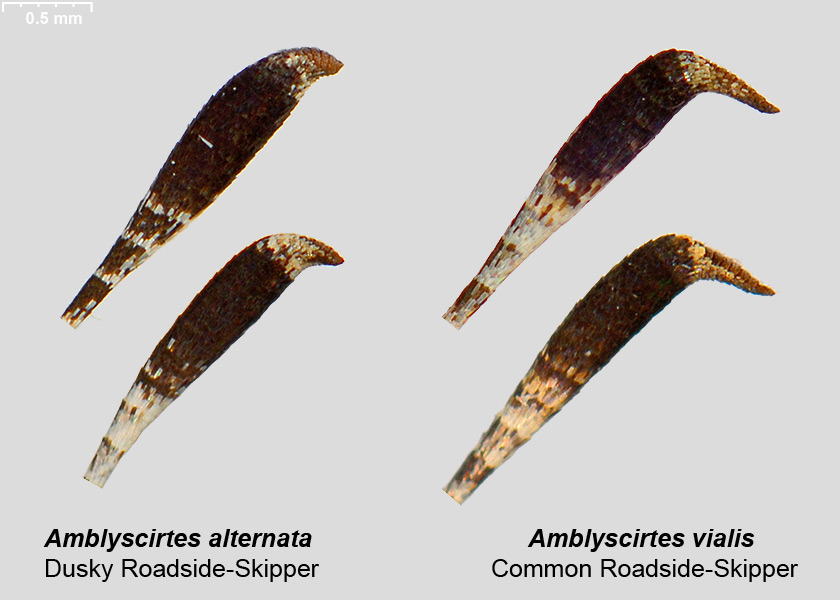
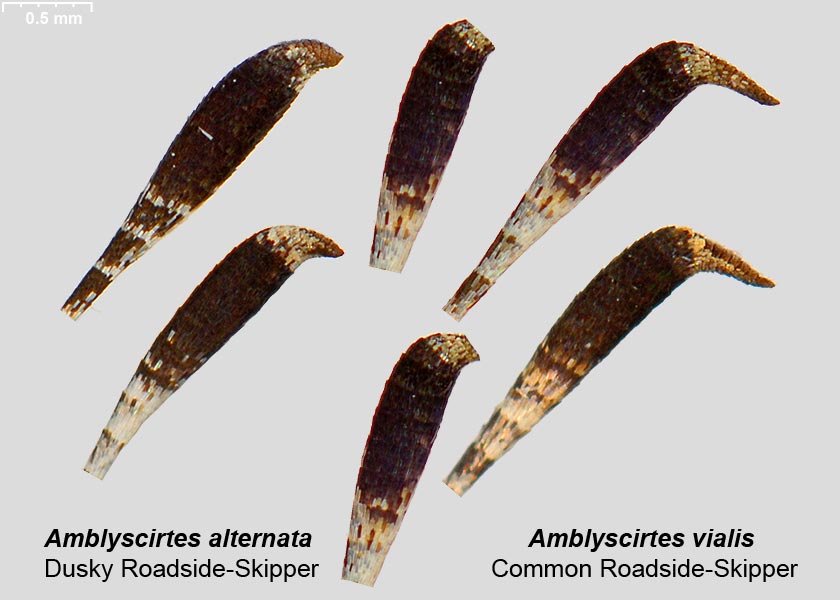
Dorsal view of right antennae of Amblyscirtes alternata (Grote & Robinson, 1867) – Dusky Roadside-Skipper (left, ♂ above, ♀ below) and Amblyscirtes vialis (W. H. Edwards, 1862) – Common Roadside-Skipper (right, ♂ above, ♀ below). Data: all leg. N.V. Grishin; While there is no apparent sexual dimorphism, it is clear that both species possess apiculus. It is also apparent that apiculus in A. alternata is stout and significantly shorter than in other Amblyscirtes species, e.g. in A. vialis. This shorter apiculus may give an impression that A. alternata has blunt antennae, especially in live individuals. Moreover, it might be a semantic issue whether the antennae are "blunt", as with apiculus this short they might look "blunt" from a distance. Nevertheless it is important to know that the apiculus is present, and in closer view antennae are "tapered" towards the end. |
|
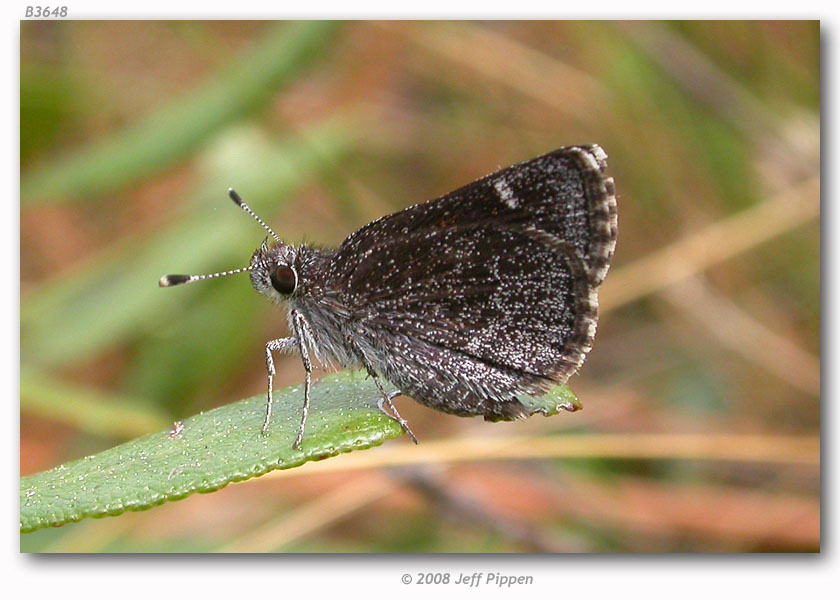
Amblyscirtes alternata ♀ NORTH CAROLINA: Pender Co., 24-Apr-2004 |
|
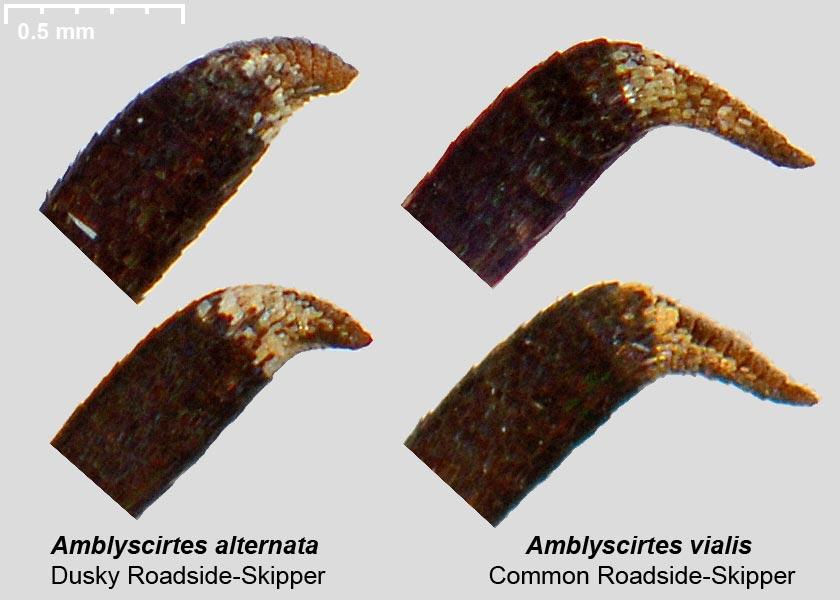
A magnified image of the same antennae showing the details of apiculi in the two species. While shorter apiculus is indeed a good and reliable field-mark of A. alternata, it should be used properly. Truly "blunt" antennae mean that the apiculus broke off and thus are not indicative of A. alternata. |
|
Two images in the middle show how antennae with broken apiculi could look like. It is still A. vialis. |
|
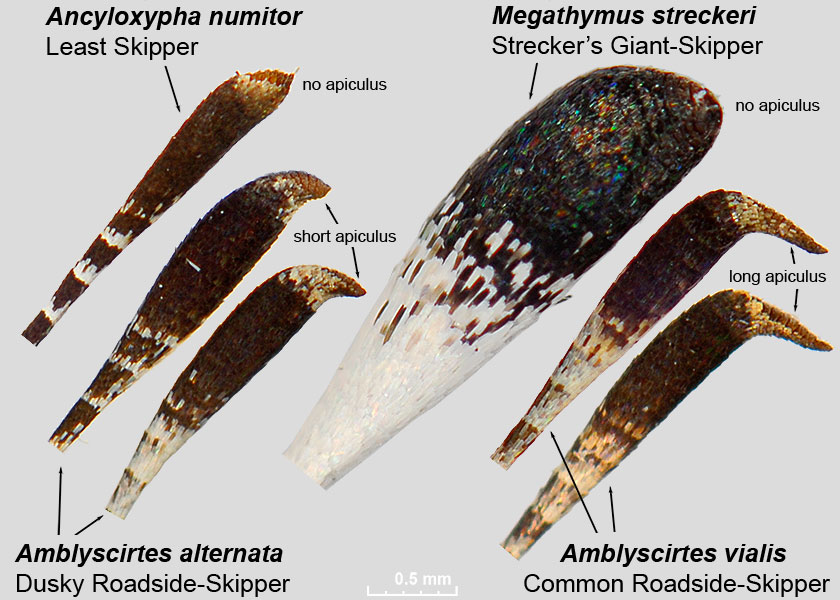
Are there skippers without apiculus? Yes, Least skipper genera (e.g. Ancyloxypha, Oarisma, Copaeodes) and most Giant-skippers lack the apiculus altogether and have truly blunt antennae. We illustrate the structure of the club for Ancyloxypha numitor (Fabricius, 1793) – Least Skipper ♀ MARYLAND: Frederick Co. ex ovum, ex ♀, hatched on 3-Jul-1999 (top left), and Megathymus streckeri (Skinner, 1895) – Strecker's Giant-Skipper ♀ ARIZONA: Apache Co. ex ovum, hatched on 7-Dec-2008 (top-right). For comparison, Amblyscirtes antennae are also shown. The differences between no apiculus, short apiculus and long apiculus should be clear. |
|
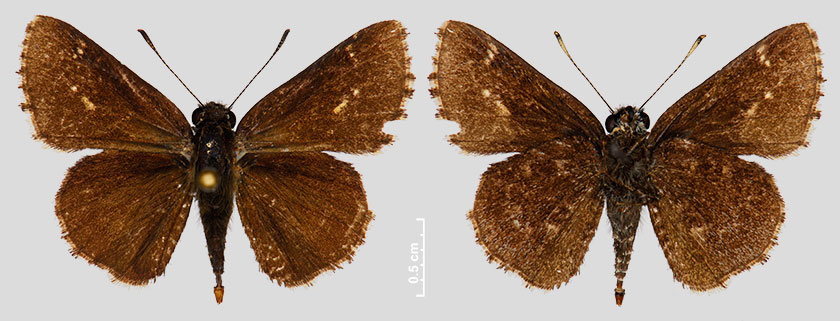
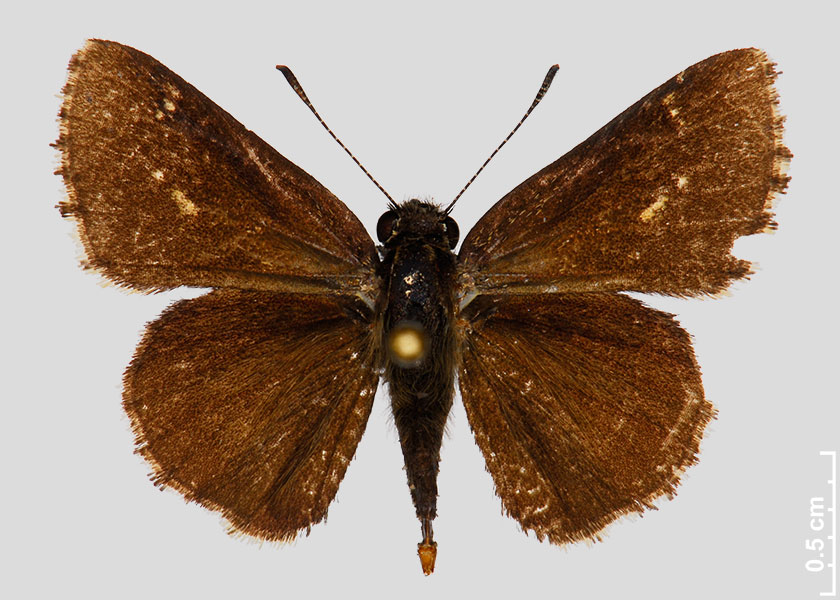
What would you say about this skipper based on the antennae? Data: |
|
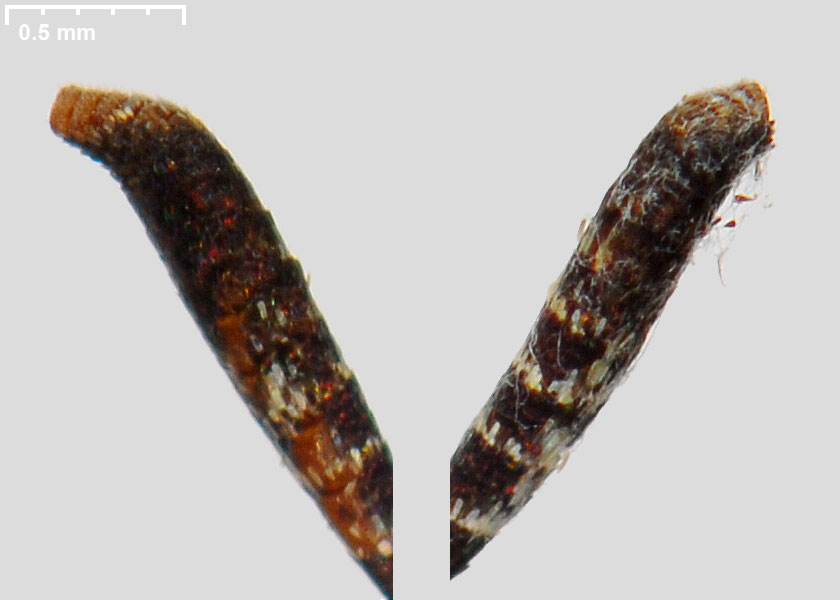
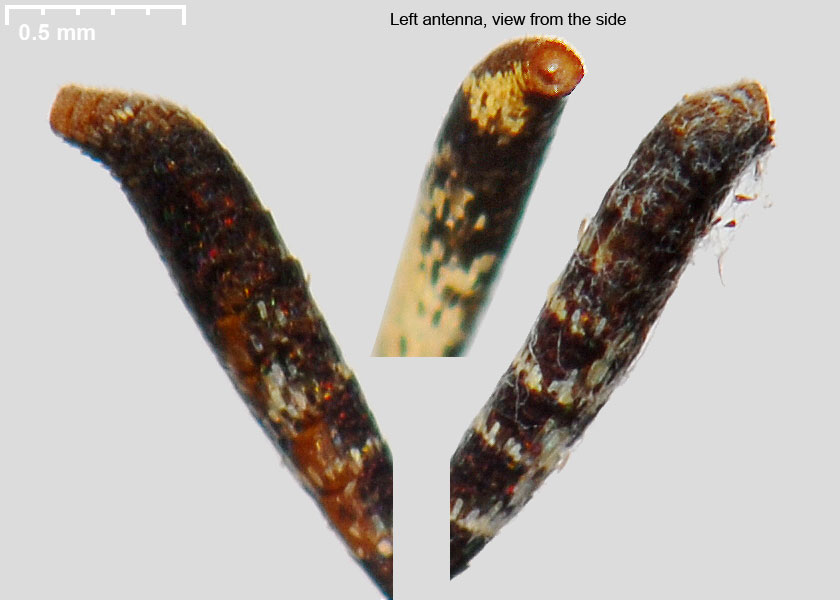
Let's see magnified antennal clubs, left and right, from above. What do you think? |
|
Image in the middle shows a slide view of the left antenna. A round reddish disk at the tip is the side of one of the middle segments in the apiculus. Segments terminal to it were broken off revealing the surface of the disk. |
|
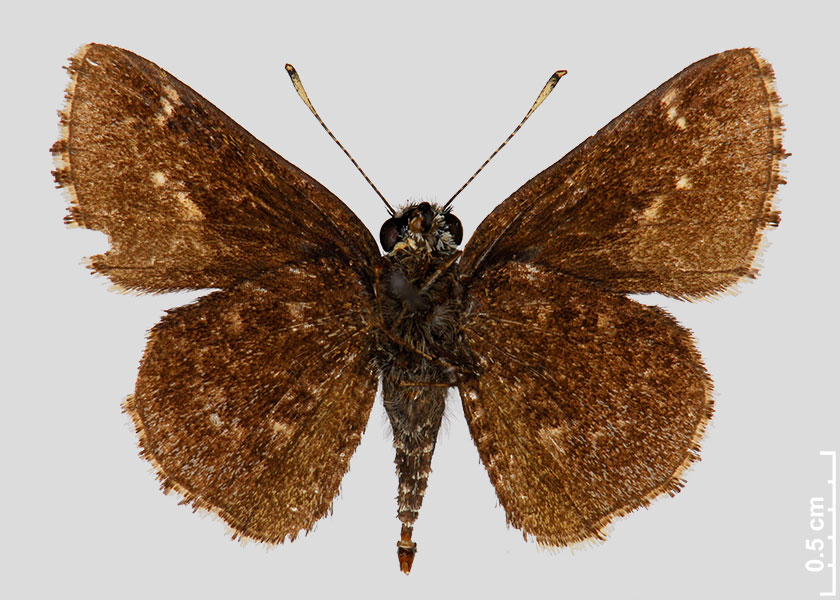
This skipper is not A. alternata, it is |
|
Amblyscirtes belli H. Freeman, 1941 ♂V TEXAS: Wise Co. LBJ National Grassland, 11-May-2008 |
|
All images are © Nick V. Grishin, except as noted |
